Imagine a storybook where your child is the hero—and every illustration actually looks like them, not a generic cartoon character. That’s no longer science fiction. A personalized AI storybook combines photos, story generation, custom character training, illustration generation, editing, and professional printing in one production process.
The technology behind it—purpose-built models for text and images, character training from your photos—isn’t magic; it’s machine learning and computer vision. The important question isn’t whether AI can create a storybook (it can), but how well: whether it’s mature enough to give you a book you’re happy to read to your child at bedtime.
How AI Storybooks Work: From Photos to a Printed Book
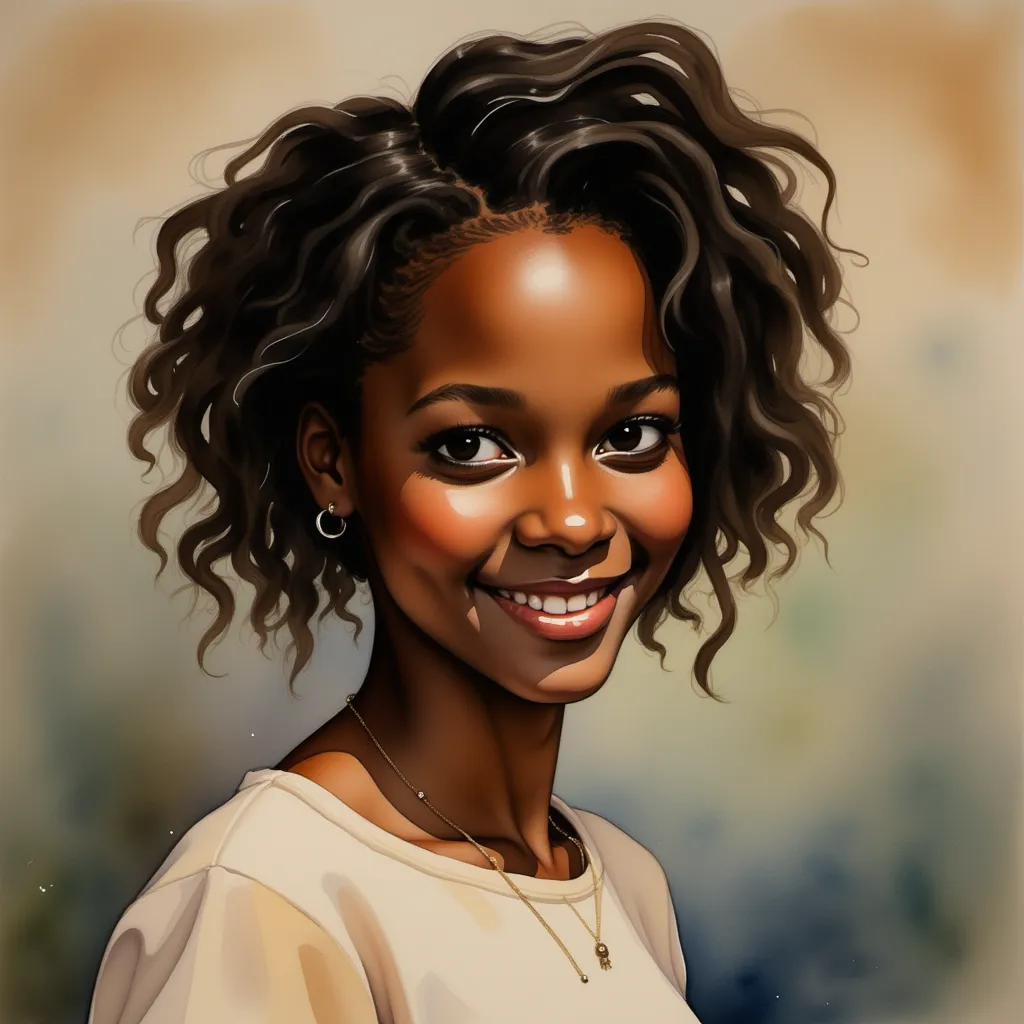
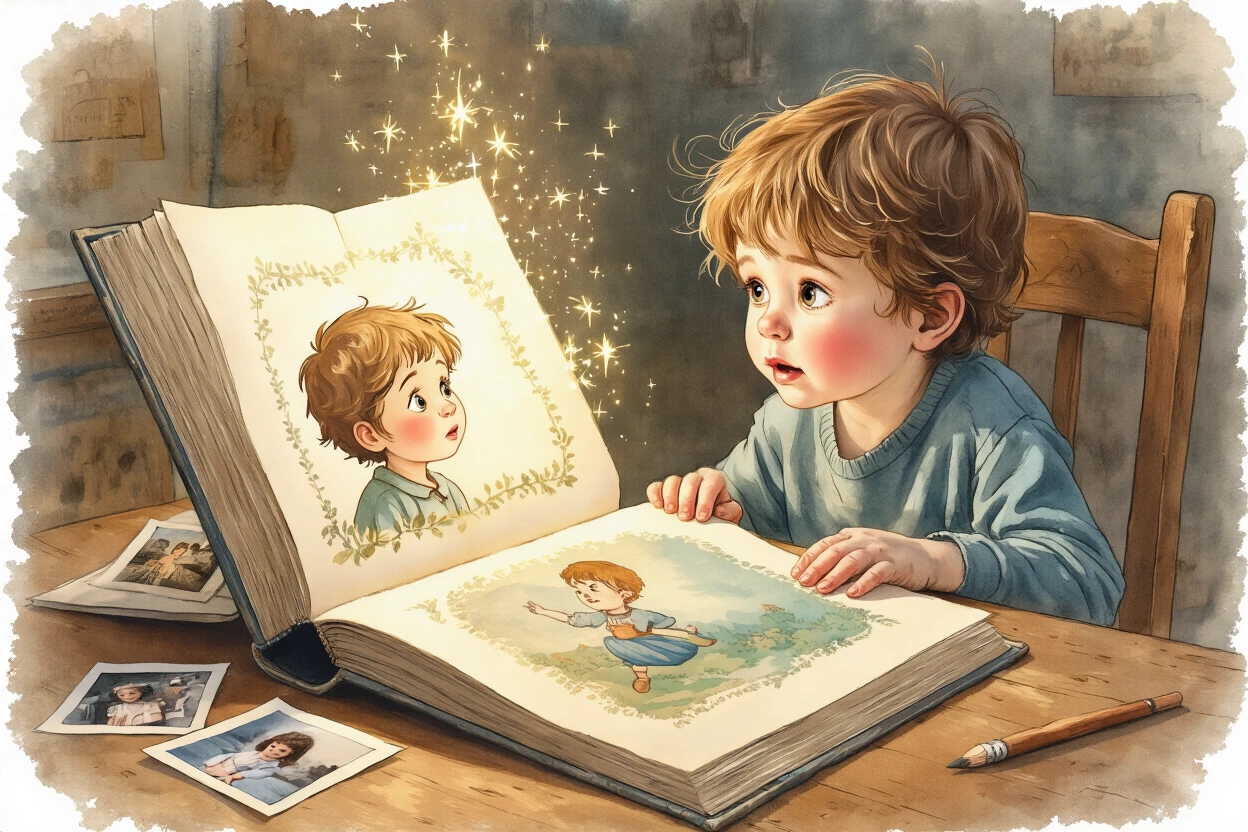
Imagine a storybook where your child is the hero—and every illustration actually looks like them, not a generic cartoon character. That’s no longer science fiction. A personalized AI storybook combines photos, story generation, custom character training, illustration generation, editing, and professional printing in one production process.
The technology behind it—purpose-built models for text and images, character training from your photos—isn’t magic; it’s machine learning and computer vision. The important question isn’t whether AI can create a storybook (it can), but how well: whether it’s mature enough to give you a book you’re happy to read to your child at bedtime.
Key Takeaways
- Personalized AI storybooks combine purpose-built text and image systems with a custom-trained image model that learns your child's appearance from uploaded photos
- Custom model training (fine-tuning) is what separates premium AI storybook makers from free alternatives. It ensures the character looks consistently like your actual child across up to 40 pages
- Premium tools like Storique's personalized AI storybook creator produce 26-40 page hardcover books with 100+ illustrations, professional printing, human editorial review, and quality control. At Storique, styles are created by artists and algorithms are built and supervised by AI experts—we automate a process that would take weeks by hand, with no mass-generation or “AI slop.” Digital drafts are ready within hours, with hardcover shipping in 3-9 business days
- Free AI storybook tools use generic character generation without custom training, resulting in lower-quality illustrations and templated stories that don't look like your child
- Key quality factors to evaluate: character consistency across pages, illustration coherence (no AI artifacts), story structure with proper pacing, and customization options
What Is a Personalized AI Storybook?
An AI storybook creator uses artificial intelligence to create personalized children's books tailored to your child. You provide some basic information—the child's name, photos, perhaps a theme like "space adventure" or "magic garden"—and the system generates both story text and illustrations featuring your child as the main character.
The technology combines large language models (LLMs) for writing stories and image generation models for creating illustrations. Some systems stop there. Others, like storique.ai, add an additional layer: training a custom AI model on photos you upload so the character in the book actually looks like your child, not a generic cartoon character.
At Storique, it’s not “just AI.” The illustration styles are created and curated by artists. AI experts design and supervise the algorithms. What we do is automate an art process that would otherwise take illustrators and writers weeks—so you get a high-quality, personal book without the wait or the cost of a fully manual commission. Human oversight, expert curation, and careful quality control are what keep the result from feeling like generic “AI slop.” We don’t do mass storybook generation; we focus on high-detail, one-by-one quality. That’s why our books look and feel like real books, not templates.
The difference between a basic AI storybook maker and a premium AI storybook creator comes down to three things:
- Character accuracy: How well the AI captures your child's actual appearance
- Illustration quality: The resolution, consistency, and professional finish of artwork
- Story authenticity: Whether the narrative feels written by a human or generated by a bot that's read too many corporate mission statements
Premium AI storybook creators invest in custom model training, which is computationally expensive and time-intensive. Free alternatives skip this step entirely, which is why they produce generic results.
How Are Personalized AI Storybooks Made?
Two main AI systems work together to create a personalized storybook: a text creator and an image creator.
The text creator uses more capable models built for storytelling and narrative, not generic chatbots. It writes the story. You provide parameters—the child's name, age, interests, maybe a specific lesson you want included—and it generates a narrative. Better systems include human editing to remove the AI's tendency toward formulaic plots and overly neat moral lessons. Kids can sense a lecture disguised as a story.
The image creator creates illustrations. Basic systems use generic prompts like "young girl with brown hair in a forest." The AI draws a girl with brown hair, but she won't look like your daughter. She'll look like the averaged composite of thousands of girls with brown hair the AI was trained on.
Advanced AI storybook creators like storique.ai use a different approach. You upload 8 photos of your child. The AI trains a custom model specifically for that child's face. When it generates illustrations, it's not pulling from a generic database—it's working from a model that knows what your kid actually looks like. This is called fine-tuning or model training, and it's computationally expensive. That's why most free AI storybook tools skip this step entirely.
The training process takes time (usually several hours of GPU processing) and requires careful handling to balance accuracy with artistic style. Too little training and the character looks generic. Too much and you get uncanny-valley photocopies that don't work in an illustrated storybook context.
How Character Training Actually Works
Here's what happens when you upload photos to an AI storybook creator with pictures that uses custom model training.
First, the system analyzes your photos to identify consistent facial features—the shape of the eyes, the specific curve of a smile, the exact shade and texture of hair. It's looking for what makes this face unique across multiple images and angles.
Then it fine-tunes a base illustration model using those photos. Think of it like teaching an artist to draw one specific person by showing them multiple reference photos. The AI learns the distinctive features and how to reproduce them in different poses, expressions, and artistic styles.
When you request a book, the system generates illustrations using this custom-trained model. Each image prompt includes not just scene descriptions ("standing in a magical library") but also references to the trained character model. The result is a character who looks consistently like your child across 26-40 pages and 100+ illustrations.
The quality depends heavily on the photos you upload. Clear, well-lit photos from multiple angles work best. Blurry selfies or photos where the child is wearing sunglasses? The AI will struggle.
storique.ai's system handles this with 26 different illustration styles and the ability to train models in any of their 26 supported languages. The same child can appear in a watercolor fairy tale in French or a bold comic-book adventure in Japanese, with the AI maintaining facial consistency across different artistic approaches.
From Photos to a Printed Hardcover: The Full Process
Although every service has a different workflow, a complete personalized AI storybook usually moves through these stages:
- Photos and story direction — you upload reference photos and provide the character names, interests, theme, and any scenes or message you want included.
- Private character training — the image system learns the recognizable features of each photo-based character.
- Story generation — a narrative system creates an age-appropriate plot from your direction.
- Illustration generation — the trained character model is used to illustrate each scene in a consistent style.
- Quality review — the text and images are checked for artifacts, inconsistencies, and story alignment.
- Your review and editing — you can refine text, replace illustrations, and adjust pages before approving the book.
- Printing and shipping — the approved book is professionally printed, bound, and delivered as a hardcover.
You can see the practical workflow in the step-by-step AI storybook guide, including ordering, editing, image generation, and adding pages.
Are AI Storybooks Safe for Kids?
The finished book can be as age-appropriate as any other children's book, but parents should evaluate the service behind it. A responsible AI storybook workflow should protect family photos, keep uploaded characters private, review generated text and images, and let a parent approve every page before printing.
At Storique, uploaded photos are used to create a private character model, illustration styles are artist-curated, and customers can review and edit the digital book before it is printed. Parents should still read the finished story with the same care they would apply to any personalized content. For specific questions about photos, editing, delivery, and quality control, see the Storique FAQ.
What Can Go Wrong During AI Storybook Creation?
The most common problems are recognizable once you know what to look for:
- Character drift: the child looks different from one illustration to the next because the character model or reference photos are not strong enough.
- Image artifacts: hands, faces, text, or background objects can be malformed and need regeneration.
- An inconsistent visual style: individual images may look good while failing to feel like pages from the same book.
- Flat, generic writing: unconstrained story generation often produces formulaic plots and overly neat moral lessons.
- An uncanny resemblance: an image can be recognizable but too photorealistic for the chosen illustration style.
Good services combine stronger character training with editorial review, regeneration tools, and customer approval rather than treating the first generated result as final.
Free vs. Premium AI Storybook Tools: What's the Difference?
Free AI storybook creators exist, and they'll give you a digital PDF with a generic story and illustrations. You'll notice the limitations immediately.
Free tools typically use generic character generation without custom training. The "personalization" means inserting your child's name into the text and maybe selecting hair color from a dropdown menu. The character won't look like your actual kid.
The stories tend to be short (8-12 pages), formulaic, and locked into a handful of templates. You might get three plot options: lost toy, making friends, or learning to share. The prose often reads like it was written by an AI that learned storytelling from motivational Instagram posts.
Illustrations in free tools are usually lower resolution, inconsistent in style from page to page, and sometimes include the weird artifacts AI image creators produce when they're not properly supervised (extra fingers, distorted faces, objects that don't quite make physical sense).
Premium AI storybook makers charge for a reason. They invest in:
- Computational power for custom model training (GPU hours are expensive)
- Human editors to refine AI-generated text
- Quality control to catch illustration errors
- Professional printing and hardcover binding
storique.ai produces 26-40 page hardcover books with 100+ illustrations. The digital draft is ready within hours, and the printed hardcover ships in 3-9 business days depending on your country. Why isn’t it cheaper or instant? Because good work takes time and the right resources: artists and AI experts, robust data handling and security for your family’s photos, and quality control at every step. We don’t cut corners for speed or volume—we aim for beautiful, personal books that deserve to sit on your shelf. Check storique.ai pricing to see how that investment translates into the final product.
The price difference reflects the difference between a novelty PDF you might look at once and a physical book that becomes part of your child's bookshelf for years.
How to Evaluate AI Storybook Quality
Not all AI-generated storybooks are created equal. Here's what separates good from mediocre when evaluating the best AI storybook creator for your needs.
Character consistency: Does your child look like the same person across all illustrations, or does their appearance drift as the AI generates new images? Inconsistent characters break immersion immediately. Premium tools maintain facial consistency through careful model training and quality checks.
Illustration coherence: Are the scenes logically composed, or do you spot AI weirdness (hands with wrong number of fingers, text that's gibberish, backgrounds that don't follow perspective rules)? Premium systems include quality control to catch and regenerate problematic images.
Story quality: Does the narrative have actual plot structure and age-appropriate pacing, or is it just a series of events connected by "and then"? Better AI storybook makers combine AI generation with human editing to fix the flat, corporate-speak tone that AI often defaults to.
Physical production: If you're ordering a printed book, check the specifications. A thin paperback with low-quality printing isn't the same as a professionally bound hardcover. storique.ai prints 26-40 page hardcover books because anything less doesn't feel substantial enough to justify the "keepsake" category.
Customization options: Can you actually influence the story content, or are you just filling in name fields in a template? The ability to customize both illustrations and text before printing matters if you want something that feels personal rather than mass-produced.
The Future of AI-Generated Children's Books
AI storybook creators for kids represent a shift in who can create children's books. You no longer need to commission an illustrator or navigate traditional publishing. You need photos and an internet connection.
This democratization has tradeoffs. The barrier to entry for low-quality content drops to zero, which means the market floods with mediocre AI-generated books. But the technology also enables genuinely new products: truly personalized books at scale, multilingual stories that would be economically impossible to produce traditionally, and rapid iteration based on what actually resonates with kids.
The technology will improve. Current AI illustration still occasionally produces artifacts that give away its synthetic origin. In two years, those tells will be harder to spot. The models training on photos will capture not just facial features but expressions, mannerisms, the specific way a kid tilts their head when they're curious.
The real question is whether AI-generated storybooks replace traditional children's books or become a separate category. They won't replace the craft of genuinely talented children's book authors and illustrators creating original stories. But they might replace the generic mass-market books that already feel templated and impersonal.
For parents, AI storybook creators like storique.ai offer something traditional publishing can't: a book where your specific child is the hero, illustrated in professional quality, delivered faster than you could commission custom artwork, and priced below what a custom-illustrated book would cost. At Storique, that quality comes from the combination of artist-curated styles, expert-built and supervised algorithms, and human oversight—automating a process that would otherwise take weeks, without the “AI slop” of mass-generated content. That's not a replacement for all children's books. It's a new category entirely.
Ready to create one? Visit the personalized AI storybook creator, follow the step-by-step creation guide, compare AI storybook pricing, or browse frequently asked questions.
FAQ
What is a personalized AI storybook?
A personalized AI storybook is a children's book created from a story idea and photos. AI systems help produce the text and custom illustrations, while the customer reviews and edits the book before printing.
How does custom character training work for an AI storybook?
Custom character training starts with 8 photos of your child. The system analyzes consistent facial features, then fine-tunes an illustration model to recreate the child's appearance across 26-40 pages and 100+ generated illustrations.
What's the difference between free and premium AI storybook tools?
Free AI storybook tools typically don't include custom model training, resulting in generic-looking characters that don't resemble your actual child. Premium AI storybook creators invest in custom training, professional printing, human editorial review, and quality control—ensuring a high-quality hardcover book delivered quickly.
How long does it take to create an AI storybook?
Premium AI storybook creators like storique.ai deliver a digital draft within a few hours (max 24 hours). The printed hardcover ships in 3-9 business days depending on your country. Free tools produce digital PDFs instantly, though the quality is significantly lower.
Can I customize an AI-generated storybook?
Yes, most premium AI storybook creators allow you to customize story elements like the child's name, age, interests, and themes before the AI generates the content. Some even allow post-generation editing before final printing.
Is the AI storybook creator technology good enough for actual children's books?
Premium AI storybook creators have reached a quality level suitable for professional children's books, with consistent character illustration, coherent scenes, and human-edited text. However, free and low-quality tools still produce obvious AI artifacts and generic stories.
A little story magic, delivered.
New free stories, thoughtful gift ideas, and occasional Storique news — one lovely email at a time.
- Free stories
- Gift ideas
- Storique news