
Creative work used to require years of practice in a specific discipline — illustration, writing, music composition, film editing. That's changing. Not because AI replaces creative skill, but because the technical barrier to expressing an idea has collapsed. You can now generate a polished illustration in seconds, write a full short story in minutes, or compose original music without touching an instrument.
The real question in 2026 isn't whether AI can help with creativity. It's which tools are worth your time, and what each one is actually good for.
8 Best AI Tools for Creativity in 2026, Ranked by Use Case


Creative work used to require years of practice in a specific discipline — illustration, writing, music composition, film editing. That's changing. Not because AI replaces creative skill, but because the technical barrier to expressing an idea has collapsed. You can now generate a polished illustration in seconds, write a full short story in minutes, or compose original music without touching an instrument.
The real question in 2026 isn't whether AI can help with creativity. It's which tools are worth your time, and what each one is actually good for.
What Makes an AI Tool Actually Creative?
Not all AI tools marketed as "creative" function the same way. Some are genuinely generative — they produce novel outputs from open-ended prompts. Others are automations dressed as creativity — they remix templates with your name inserted.
The best AI creativity tools in 2026 share three traits:
- They respond to specificity. A vague prompt produces a vague result. Great tools reward detailed, personal input with output that feels genuinely tailored.
- They preserve your voice. The tool should amplify your idea, not replace it with something generic.
- They finish things. The most useful creative AI tools produce something complete — a song, a book, an image — not just a starting point you have to finish manually.
With that in mind, here are the tools that actually deliver.
1. Midjourney — Best for Visual Concept Development
Midjourney remains the benchmark for AI image generation in 2026. Its outputs have a recognizable aesthetic quality — painterly, textured, often luminous — that other tools struggle to match. If you're developing visual concepts, mood boards, or standalone artwork, it's still the most reliable choice.
Best for: Concept art, illustration, mood boards, visual storytelling Not ideal for: Precise control over composition or character consistency across multiple images
The learning curve is real. Midjourney rewards users who invest time in understanding how to write prompts — aspect ratios, style references, lighting language. But the output ceiling is higher than almost any competitor.
2. Adobe Firefly — Best for Creatives Already in the Adobe Ecosystem
If you use Photoshop or Illustrator, Firefly is already embedded in your workflow. Its generative fill feature — which expands or replaces elements of an existing image — is genuinely useful in ways that standalone generators aren't.
Best for: Photo editing, design workflows, commercial use (commercially safe outputs) Not ideal for: Purely generative creative work without a base image
Adobe's advantage is integration. Firefly doesn't require you to leave your existing creative process — it extends it.
3. Suno — Best for Music Creation Without Musical Training
Suno generates complete songs from text descriptions. Type "upbeat indie-folk song about a rainy morning, female vocals, acoustic guitar" and receive a finished track with original lyrics, instrumentation, and vocals in under a minute.
Best for: Original music creation, custom songs as gifts, background tracks, creative experimentation Not ideal for: Precise technical music composition or sound design
Suno democratizes something that was genuinely inaccessible to most people: creating a song from scratch. The outputs vary in quality but have improved substantially — and for emotional, occasion-specific music (a birthday song, a wedding track, a farewell tribute), it produces results that feel personal in a way stock music never can.
4. Claude — Best for Long-Form Creative Writing and Storytelling
Claude (Anthropic) has become the most capable AI for long-form narrative work. Unlike tools that produce plausible-sounding text quickly, Claude handles plot structure, character consistency, and tone with a sophistication that makes it genuinely useful for story development.
Best for: Long-form writing, story development, editorial feedback, creative research Not ideal for: Real-time tasks or image generation
For creative writing specifically, Claude's ability to hold a large amount of context — understanding your characters, your established world-building, your stylistic preferences — makes it feel less like a tool and more like a collaborator.
5. Storique — Best for Personalized Illustrated Storybooks
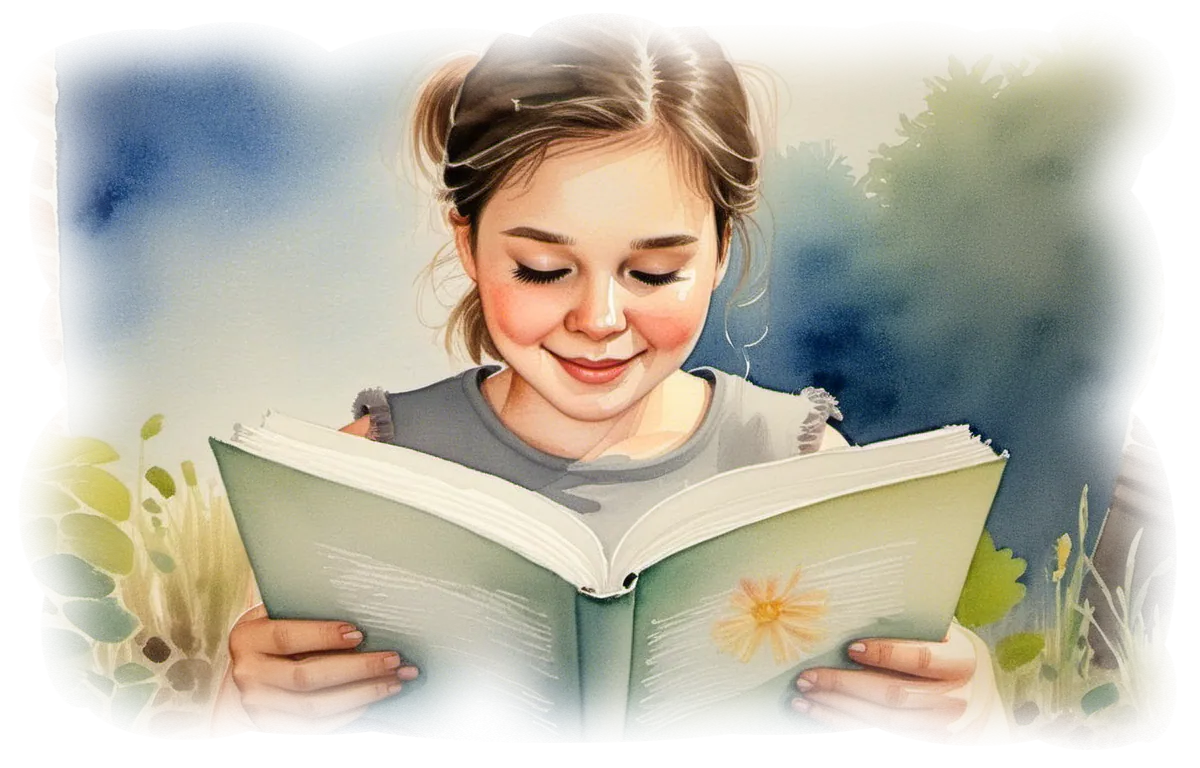
Storique's personalized AI storybook creator occupies a distinct category among creative AI tools: it creates finished, physical books where a real person is the main character and remains recognizable across the illustrations.
Best for: Personalized gifts, family storytelling, children's books, commemorative keepsakes Not ideal for: Abstract or experimental creative work
The process starts with photos. You upload around 8 photos of the person you want to feature — a child, a partner, a grandparent — and choose a story theme. Storique's AI trains a custom model on those photos, writes a narrative, and generates 100+ illustrations that maintain character consistency across a 26–40 page book. The digital version is ready within 24 hours. A printed hardcover ships in 3–9 business days.
What makes Storique interesting from a creativity standpoint is what it enables rather than what it replaces. It lets someone with no illustration skills create a book that feels genuinely handcrafted — because the illustration styles are developed by artists, and the AI process is supervised by experts rather than automated at volume. The result is a physical object that carries real emotional weight.
For occasions like Valentine's Day, Mother's Day, or a child's birthday, a Storique book is the kind of creative output that a generic gift simply can't replicate.
Create a personalized AI storybook → | See how to make one → | Compare pricing →
6. Runway — Best for AI Video Creation and Editing
Runway's video generation capabilities have matured significantly. Its latest models produce short video clips from text or image prompts, and the editing suite makes it possible to manipulate video elements in ways that previously required professional software and expertise.
Best for: Short video creation, motion effects, video editing automation Not ideal for: Long-form video or anything requiring precise narrative control
For marketers, social media creators, and filmmakers experimenting with new formats, Runway removes enough technical friction to make video creation accessible.
7. Udio — Best for Experimenting with Music Styles
Similar to Suno but with a different aesthetic profile, Udio allows more granular control over genre blending and stylistic variation. If you're exploring the space between musical genres — ambient electronic with folk elements, orchestral hip-hop — Udio handles these hybrid prompts well.
Best for: Musical experimentation, genre exploration, instrumental composition Not ideal for: Polished, commercially ready outputs at scale
8. Krea — Best for Real-Time AI Image Generation
Krea's real-time generation mode lets you see your image update as you sketch or adjust prompts, creating a genuinely different creative experience than prompt-and-wait tools. It's particularly effective for designers who want to use AI as a fast iteration tool rather than a final output generator.
Best for: Real-time visual iteration, concept sketching, design exploration Not ideal for: Photorealistic or high-detail final outputs
How to Choose the Right AI Creativity Tool
The mistake most people make is treating AI creativity tools as interchangeable. They're not. Different tools have genuinely different strengths, and trying to use Midjourney for what Storique does — or Claude for what Suno does — leads to frustration.
A better framework:
What are you creating? Images, text, music, video, and physical objects each have different tool ecosystems. Start by matching the output type.
Who is it for? A creative project for yourself has different requirements than one you're making as a gift or for professional use. Tools like Storique are built specifically for the personal, gift-oriented use case and produce results that general-purpose tools can't replicate.
How much control do you need? Some tools optimize for speed and simplicity; others reward deep customization. Match the tool's control model to how you like to work.
What's the end format? Digital-only versus print changes everything. If the deliverable is a physical object, you need a tool that handles production — not just generation.
What's Changed in AI Creativity Tools in 2026
The biggest shift isn't capability — it's reliability. A year ago, AI tools produced impressive outputs unpredictably. In 2026, the best tools are consistently good rather than occasionally brilliant.
Character consistency across images has improved dramatically. Longer context windows in writing tools mean better story coherence. Music generation has moved from novelty to something approaching professional utility in specific use cases.
The tools that have pulled ahead share a common philosophy: they're not trying to do everything. The best AI creativity tools in 2026 are opinionated about what they're for — and excellent within that scope.
Conclusion
AI creativity tools aren't replacing creative people. They're changing what "having an idea" requires to become a finished thing. The gap between concept and execution — the part that used to require years of technical skill — has compressed to hours or minutes.
The most interesting tools aren't the most general-purpose ones. They're the ones that do a specific creative task unusually well: Midjourney for visual concepts, Suno for original music, Claude for narrative writing, Storique for personalized illustrated books that become physical keepsakes.
The best creative tool in 2026 is the one that makes your specific idea real — faster, better, or in a way that simply wasn't possible before.
A little story magic, delivered.
New free stories, thoughtful gift ideas, and occasional Storique news — one lovely email at a time.
- Free stories
- Gift ideas
- Storique news