
The best first day of school gift is modest, chosen for this particular child, and either useful for the new routine or personal enough to keep. It does not need to be expensive. A short letter tucked into a backpack can suit the moment better than another large toy.
First Day of School Gifts: 12 Ideas for 2026

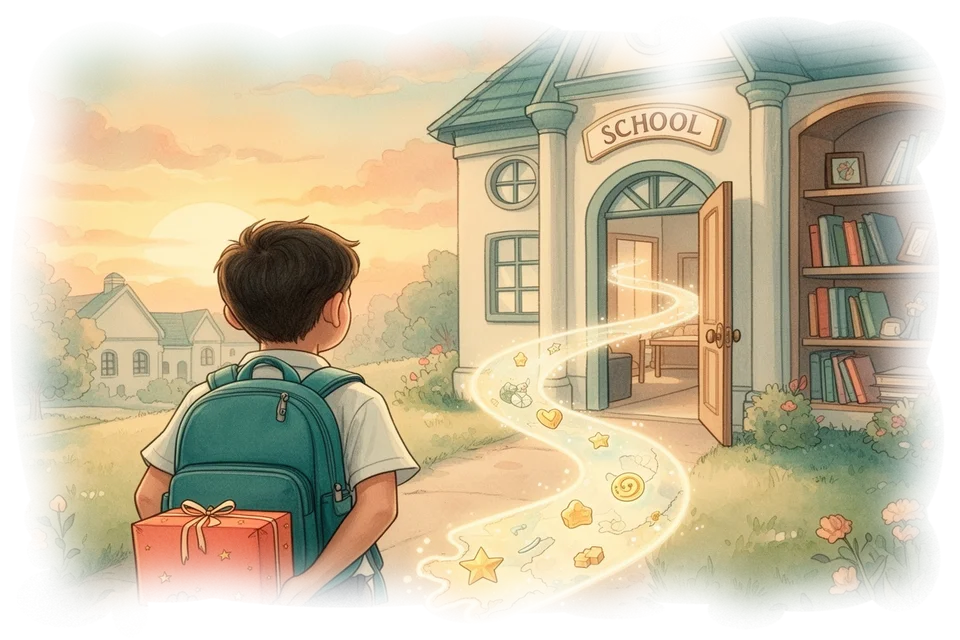
The best first day of school gift is modest, chosen for this particular child, and either useful for the new routine or personal enough to keep. It does not need to be expensive. A short letter tucked into a backpack can suit the moment better than another large toy.
A quick way to choose the right first-day gift
Start with two questions: What will the child actually use, and what would feel unmistakably theirs? The answer depends less on the school year than on the child.
| Child or situation | Useful choice | Personal choice |
|---|---|---|
| Starting school for the first time | A few items from the school's supply list | A letter for the backpack pocket |
| Excited but unsure about the new routine | A water bottle they can open alone | A small pocket token chosen together |
| Returning to primary school | A desk caddy or homework-space refresh | A photo and memory journal |
| Always carrying a book | A book about their current interest | A bookmark with their name |
| Moving to a new school | A simple watch, if they can use it | A letter to open at the end of term |
| Already has plenty of toys | Help with one practical item | A time capsule to open next summer |
If you are buying for someone else's child, ask the parents before choosing equipment. Schools can be surprisingly specific about pencils, scissors, bags, and even water bottles.
12 first day of school gift ideas
1. A short handwritten letter
Keep it to a few sentences and make it specific. Instead of "You'll do great," mention something true about the child: they ask good questions, remember people's names, or keep trying when a puzzle is difficult. Put the letter somewhere they will find it during the day.
2. A small kit from the actual supply list
Wrap three or four items the school has already requested. A pencil case the child chose, the correct glue sticks, or scissors that fit their hand can feel special without creating more clutter.
Do not turn the full shopping list into a surprise. Let the child help choose the things where color, pattern, or comfort matter.
3. A personalized bookmark
A bookmark is inexpensive, easy to post, and useful from the first library visit. Add the child's name, a pet, or a small illustration linked to whatever they currently love. Leave enough blank space for them to decorate it later.
4. A pocket comfort token
Choose a smooth stone, small wooden shape, keyring charm, or button together. Give it one clear job: it stays in the backpack or pocket and can be held when the day feels unfamiliar.
The choice matters more than the object. Ask where the child wants to keep it and whether they would rather have something private or something they can show a classmate.
5. A first-day photo and memory journal
Use one spread for the first day, then one page each month. Add a photo, a drawing, and one or two lines about something the child noticed. You do not need to document every week. Even a handful of finished pages will catch details that would otherwise disappear.
6. An after-school experience
Plan something small for the second week: an ice cream stop, a library visit, a swim, or an afternoon baking together. Putting it on the calendar gives the child something familiar beyond the first-day fuss.
This is especially useful when grandparents or godparents want to give time instead of more belongings. State the date rather than offering a vague "day out sometime."
7. A book about their current interest
Choose the subject the child is already talking about, whether that is sharks, football, space, drawing, or a particular fictional world. The first day is not the moment to improve their taste. It is a good moment to hand them something they genuinely want to open.
If their shelves are already full, our guide to gifts for a child who has everything has alternatives that do not amount to one more toy.
8. A simple watch, if they are ready
A watch can be useful when a child already understands the time and is beginning to manage parts of the day independently. Choose a clear face and a comfortable strap. If telling time is still new, wait. A gift should not arrive with an unspoken test attached.
9. A creative desk caddy or homework station
This works best for a child returning to school. Decorate a sturdy box for pencils and paper, or give one corner of a shared table a lamp, storage cup, and folder tray. Building it together is part of the present.
Keep the setup small enough to maintain. A useful corner beats a perfect desk that nobody wants to tidy.
10. A time capsule for the end of the year
Ask the child to draw themselves on the first day and answer a few questions: What do you hope to learn? What feels exciting? What would you like your future self to remember? Add a note from the adults, seal the envelope, and choose an opening date at the end of the school year.
The gift costs almost nothing, but it makes room for the child's own version of the day.
11. A personalized illustrated first-day adventure
A story can use the child's real interests and small worries without predicting how the day will go. One story seed: the classroom map becomes a treasure map, a friendly guardian lives in the school library, and the child solves a missing-book mystery before going home.
With Storique, you can upload photos so the child becomes a recognizable illustrated character, then shape the story, edit the text and images, and approve a hardcover copy. For inspiration, see how one family turned their memories into a storybook.
The useful part is the detail. Include the yellow backpack, the child's favorite animal, or the lunch they have already planned. Our guide to gifts that tell a story explains why a specific memory or relationship gives a personalized gift its weight.
12. Help with one larger practical item
Before buying a second backpack, ask the parents what the family still needs. It might be a winter coat, sports equipment, an instrument rental, or part of a class trip. Contribute toward that, then add a small card or token the child can hold on the day.
What belongs in a German Schultüte?
In Germany, many children receive a Schultüte when they start school. Goethe-Institut material describes the cone as a first-day tradition commonly filled with sweets, school supplies, and small gifts.
A sensible mix could include pencils, an eraser, a small book, a bookmark, one personal token, and a few treats. Check what the family and school have already organized before adding supplies. The cone should still feel festive, so it does not need to become a disguised stationery order.
There is no single German school-start date. The Kultusministerkonferenz publishes school holiday calendars by federal state, and the dates differ. If you are sending a gift from abroad, check the child's state and school first.
Match the gift to the child's age
Children starting school for the first time
Choose something small with a clear purpose. A pocket token, a letter, or an item they have practiced using is easier to understand than an elaborate gift for the distant future.
Primary-school children returning after summer
They already know the routine, so use the gift to mark what is changing. A new reading interest, a refreshed work corner, or a journal for this particular year feels more relevant than a generic school-themed present.
Older children
Skip the ceremony if they dislike it. Ask what would help: a plain watch, money toward something they are saving for, or a quiet breakfast together before school. A letter can still work, but write to the person they are now, not to the five-year-old you remember.
The gift helps, but the routine matters more
The American Academy of Pediatrics recommends visiting a new school or classroom when possible, attending orientation, rehearsing the new situation, asking what the child is worried about, and working through possible solutions together.
For younger children, UNICEF Parenting also suggests using pretend play to practise school routines, working on getting-ready skills, adjusting sleep and wake times before the first day, listening to the child's feelings, and keeping the goodbye brief and positive.
A present can sit inside that preparation, but it cannot replace it. If worries about school are intense, persist, or disrupt daily life, speak with the school and an appropriate health professional rather than relying on a gift or story to solve the problem.
Frequently asked questions
Do parents usually give a first-day gift?
It depends on the country, school, and family. A Schultüte is a familiar part of German school enrollment, while many families elsewhere give nothing beyond the supplies the child needs. There is no reason to start an expensive tradition because other families might have one.
How much should a first-day-of-school gift cost?
Set a limit that is comfortable for your family. A letter, bookmark, token, or scheduled afternoon together can be meaningful with little or no spending. If you choose a larger gift, make sure the parents agree it is needed.
What can grandparents give?
A posted letter, small book, bookmark, or contribution toward an agreed practical item all work from a distance. Grandparents who live nearby could plan the after-school outing or help make the memory journal.
Should siblings receive something too?
That is a family choice. A very young sibling might enjoy a small snack or drawing activity while the school starter opens their gift. Keep the focus clear: the larger occasion belongs to the child starting school.
Is a personalized book suitable before the first day?
Yes, if there is enough time to create it without adding pressure to an already busy week. Reading it before school can open a conversation about what the child expects, which parts feel familiar, and what they still want to ask.
The right gift should look as though it was chosen for this child, not for an imaginary average pupil. If that gift is a book starring someone they recognize, you can start a personalized school adventure with Storique and edit the pages until the story sounds like your family.
A little story magic, delivered.
New free stories, thoughtful gift ideas, and occasional Storique news — one lovely email at a time.
- Free stories
- Gift ideas
- Storique news