
Midsommar is the Nordic celebration of the summer solstice. In 2026 it falls between June 19 and 24, depending on the country.
When Is Midsommar in 2026?

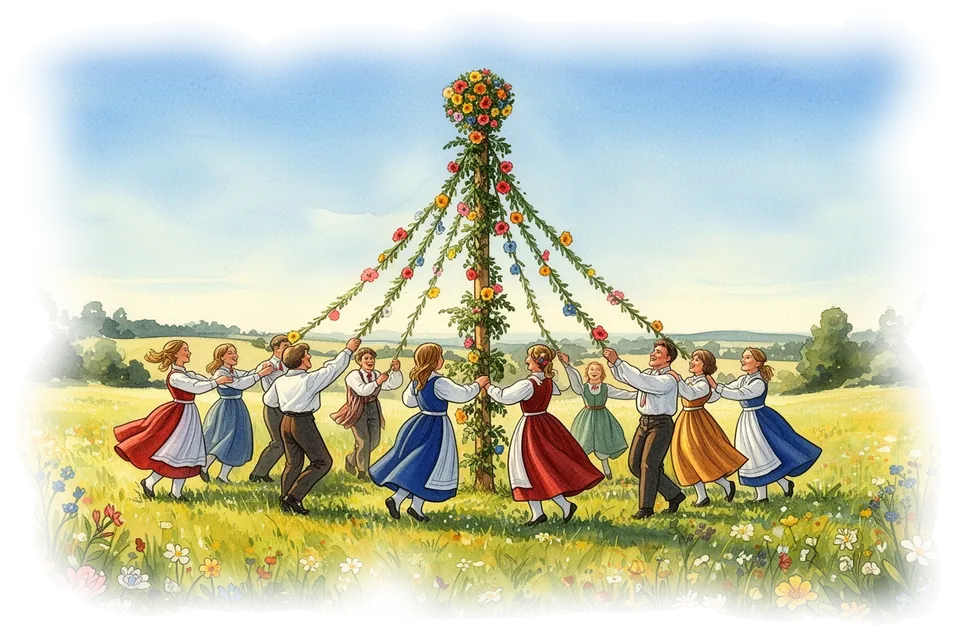
Midsommar is the Nordic celebration of the summer solstice. In 2026 it falls between June 19 and 24, depending on the country.
When is Midsommar in 2026?
- Sweden (Midsommar): Friday 19 June (Midsommarafton) and Saturday 20 June (Midsommardagen). Sweden shifted the holiday to the Friday between 19–25 June in 1953.
- Finland (Juhannus): 19–20 June, same Friday/Saturday rule.
- Norway (Sankthansaften / Jonsok): Tuesday 23 June.
- Denmark (Sankthansaften): 23 June.
- Estonia (Jaanipäev): 23 June (Jaaniõhtu) and 24 June (a public holiday).
- Latvia and Lithuania (Jāņi / Joninės): 23–24 June.
The astronomical summer solstice in 2026 is Sunday 21 June, the longest day of the year in the Northern Hemisphere.
Where does Midsommar come from?
The festival predates Christianity. The original feast was a pagan celebration of the summer solstice, tied to fertility, growth, and the peak of the year's light.
The church later mapped it onto St. John the Baptist's day on 24 June (his birthday is placed exactly six months before Christmas). That's why so many languages name the holiday after John: Sankthansaften in Denmark and Norway, Juhannus in Finland (from Johannes), Jaanipäev in Estonia, Jāņi in Latvia.
Most of the actual customs (bonfires, flower crowns, dancing through the night) come from the older pagan layer.
What does Midsommar celebrate?
Light, mostly. In northern Sweden and Finland the sun barely sets at midsummer; further south, days stretch close to 18 hours. The festival marks that peak.
It's also about nature in full bloom, gathering outdoors, and a kind of folk identity. In Sweden and Finland especially, Midsommar functions as an unofficial second national day.
Midsummer night has a romantic side too, tied historically to dreams and folk predictions about future partners.
How to celebrate Midsommar
Flower crowns
Wildflowers (buttercups, daisies, cornflowers) woven with floral wire or twine. Traditionally everyone wears one, not just children.
A maypole
The Swedish midsommarstång is a tall pole decorated with leaves and flowers, raised for dancing around. A small version works in a garden.
The "Små grodorna" dance
The "small frogs" song. Hands on the head like frog ears, hopping in a circle, singing that frogs have no proper ears or tails. Every Swedish child knows it. Worth looking up before the day.
A bonfire
Central in Denmark, Norway, Finland, and the Baltics (kokko in Finnish, bål in Danish/Norwegian). A fire pit or candles in the garden do the job too.
Traditional food
New potatoes, pickled herring (sill), sour cream with chives, crispbread (knäckebröd), strawberries with cream. Adults add a small glass of snaps, drunk with short, loud singing breaks (snapsvisor).
Seven flowers under the pillow
A folk tradition: walk silently through seven different fields on midsummer night, pick one flower from each, place them under your pillow. You'll dream of the person you'll marry.
The real point of midsummer isn't any one activity. It's the absurdly long evening. Stay outside, eat slowly, watch the sun refuse to set.
A little story magic, delivered.
New free stories, thoughtful gift ideas, and occasional Storique news — one lovely email at a time.
- Free stories
- Gift ideas
- Storique news