
To make a moving house storybook for your child, tell the truth about three things: what they will leave, what will travel with them, and what the first day in the new home may look like. Give the child a small choice in the story. Use familiar names and objects, leave uncertain plans uncertain, and read the draft together before you print it.
A child may be delighted by the new bedroom and still ask whether their pillow is staying behind. That question deserves a page. A personalized book can put the move into a sequence they can revisit, with their own bear, sibling, or dog in the pictures. It cannot promise that the move will feel easy.
If you want that story as an illustrated hardcover, Storique can turn approved character photos and your moving-day details into a draft you can edit before printing. The creation guide shows how the review works.
How to Make a Moving House Storybook for Your Child

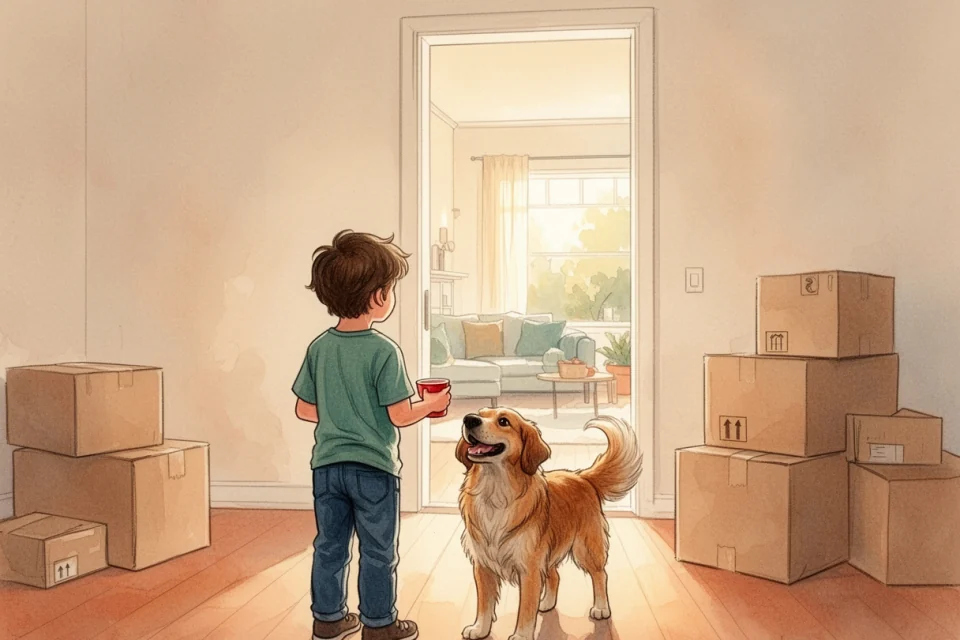
To make a moving house storybook for your child, tell the truth about three things: what they will leave, what will travel with them, and what the first day in the new home may look like. Give the child a small choice in the story. Use familiar names and objects, leave uncertain plans uncertain, and read the draft together before you print it.
A child may be delighted by the new bedroom and still ask whether their pillow is staying behind. That question deserves a page. A personalized book can put the move into a sequence they can revisit, with their own bear, sibling, or dog in the pictures. It cannot promise that the move will feel easy.
If you want that story as an illustrated hardcover, Storique can turn approved character photos and your moving-day details into a draft you can edit before printing. The creation guide shows how the review works.
Start with the child's actual question
The NHS advises parents to prepare children for a house move by talking about what will happen and why. It also recommends listening to their worries and keeping familiar routines where possible. A storybook is one way to continue that conversation, especially when the boxes and adult conversations make the plan hard to picture.
Ask what your child thinks moving means before writing a word. They might worry that their toys will be sold, that Grandma will live farther away, or that they must sleep alone in an unfamiliar room. You do not need to solve every worry in the book. You do need to know which worry the book is about.
Try this sentence starter: “When you think about the new home, what do you wonder about?” If they answer “Will my red cup be there?”, the red cup belongs in the story. An invented castle adventure probably does not.
If your child is not ready to talk, draw two boxes labelled “here” and “there.” Ask them to put people, pets, and favorite things where they think each will be. You may discover a misunderstanding without asking a long list of questions.
Decide which move the book covers
A move across town is different from leaving a school and friends. So is a planned move compared with one whose date or destination is still unsettled. Write down what you know now:
| Already decided | Still uncertain |
|---|---|
| Who is moving and who will be with the child on moving day | The exact date, if a contract or handover may change |
| Which treasured things are coming along | What the new room will look like after unpacking |
| The first familiar routine you can realistically keep | When the child will next see a distant friend |
Put the first column into the story. Treat the second as a question, not a promise. “We will find a place for the blue lamp” is safer than “Your new room will look exactly the same.” If the family is moving because of a separation, bereavement, or emergency, the child may need a different conversation and more support than a book can provide. Do not write a tidy ending over a complicated reality.
The book can also start after the move. If the first night has already happened, tell the story of finding a new route to school, making room for an old bedtime ritual, or missing a friend. There is no deadline for making sense of a new place.
Gather details that make the story recognizable
Names alone are thin personalization. Give yourself ten minutes to collect details that a stock moving story could never know:
- The child's name for the old home, street, or favorite corner.
- One object they will carry themselves, such as a soft toy or a slightly battered torch.
- The person who will be with them while the heavy boxes are moved.
- A real goodbye: the view from the window, a neighbor, a tree, or a friend.
- One ordinary thing they can expect on the first evening, such as the same bedtime song.
- A small decision they can make, such as choosing where the bear will sit.
- The question you cannot yet answer. Leave room to answer it later.
Ask permission before using a child's photo or identifiable details about a friend. The UK Information Commissioner's Office recommends discussing privacy choices with children and agreeing what is acceptable to share. You rarely need an address, school name, or precise moving date in an AI story brief. “The flat above the bakery” is usually enough.
Give the book a beginning, a middle, and a first night
You can use this seven-scene plan for an illustrated story. Keep the sequence simple enough to follow aloud.
- The familiar place. Show one real moment in the old home. “Mina watched the rain on the kitchen window while Fox sat on her feet.”
- The news. A trusted adult says what is changing in plain language: “Soon, we will live in a different home.”
- The question. Mina asks whether Fox and her red cup are coming too, and whether she can still call Grandad on Sundays. Let her ask something that matters to her, even if it sounds small to an adult.
- The goodbye. She chooses a way to remember the old place: a drawing of the window, a photo with permission, or a wave to the neighbor. Do not make her cheerful on command.
- The journey. Show who travels with her and where Fox goes. Skip logistical details that do not help the child understand the move.
- The first evening. The new room has boxes in it. The old bedtime song still works. An adult can stay nearby while she settles.
- The open ending. Mina misses the old kitchen. Tomorrow she can choose where the red cup lives. The new place may take time to feel like home.
The story does not need to turn moving day into a triumph. Children often notice the unglamorous things: where the toothbrush is, whether the cat has a quiet place, which door leads to the toilet. One truthful detail can do more than a paragraph about “exciting new beginnings.”
Hampshire County Council's library includes books about moving house in its collection for families. Reading a library book together can give your child another character's experience to compare with their own. Your personalized story can then answer the questions a general book cannot: What happens to my things? Who will tuck me in? When will I see my friend?
Match the story to the child's age and needs
For a toddler, use a short sequence with repeated names and pictures of visible objects. “Bear goes in the car. Bear comes out at the new home.” For a preschooler, show the packing, the person who will stay with them, and the first bedtime. Let the child feel both curious and unhappy. For an older child, give space to friends, school, and the parts of the move they did not choose.
Some children need a more literal visual plan. NHS Norfolk and Waveney guidance for neurodivergent children suggests pictures, “now and next” supports, and simple stories that show the steps of a change. If that fits your child, make a short practical version first: old home, moving day, journey, new home, bedtime. You can make a more imaginative keepsake later.
If a child seems very distressed, or worry is interfering with everyday life, the NHS recommends seeking help from a GP or school nurse. A book may help you talk, but it is not treatment for anxiety.
Turn the plan into a Storique book
Storique is a strong choice when you want the child to recognize their own family in an original illustrated story, rather than read a fixed moving plot with a new name on the cover. You can describe the move and choose real people, animals, or fictional companions as characters. With approved reference photos, the child and other photo-based characters can appear recognizably across the book.
The useful part for this topic is the editing. You can change the words, regenerate an illustration, add or reorder pages, and inspect the whole draft before approving a hardcover. If the first version shows the wrong caregiver on moving day or invents a finished bedroom you have not seen, correct it. An accurate, slightly messy first-night page will mean more to your child than a perfect room that never existed.
Here is a brief you can adapt in Storique:
Create a gentle illustrated story for a five-year-old named Mina, who is moving with Mum, Papa, and their dog Fox to a home across town. Mina loves the rainy kitchen window in the old flat and worries that her red cup will be left behind. Show packing, one honest goodbye, the trip with Fox, and the first evening with boxes still in the new room. Papa sings the same bedtime song there. Mina chooses where the red cup goes. Do not promise that she will immediately love the new home or know what her new room will look like. Keep the language concrete and easy to read aloud.
You can use the Storique creation guide to see the editor and ordering steps. The photo selection guide helps you choose references without uploading more than the story needs, and pricing explains the printed book. If you need an exact record of the old house, keep your original photos or make a small photo album too; an illustration is an interpretation, not an archive.
Read it before and after the move
Start early enough to create, revise, and order the printed copy before the move. Read the draft with your child while there is still time to change it. Let them correct you. If they say Fox never sits by the window, fix the scene. If they want the story to stop before the goodbye, stop there and return to it another day.
Keep the book handy after moving day. Compare the story with what actually happened: “The boxes were in a different room, weren't they?” You can tell a new memory aloud or write it into your paper copy. Printed pages cannot be changed after you order the hardcover; change any inaccurate details in the digital draft before that step.
For an urgent move, a folded paper booklet with four drawings may be the right first version. Storique makes sense when you have time to shape the details, review the illustrations, and want a printed story to keep after the last box is unpacked.
Frequently asked questions
When should I give my child a moving house storybook?
Start once the move is certain enough to explain honestly. Read it more than once if your child wants to. Correct changed details while the draft is still editable; after printing, talk about what happened differently. A story written after the move can still help with the unfamiliar routines and things they miss.
What if we do not know the moving date or new address?
Leave both out. Tell the child what you do know, such as who will move with them and which favorite things will come. If the destination is uncertain, do not draw a definite new bedroom or promise a particular school.
Should the story always end happily?
It can end with safety and companionship without requiring happiness. “Mina missed the old kitchen. Papa sat beside her while she found a place for the red cup” leaves room for how she really feels.
Can I use real photos in the storybook?
Storique can use reference photos to illustrate real people or animals. Choose images you have permission to use, avoid sharing unnecessary private details, and check the illustrated pages before printing. Keep original photos separately if you want a faithful visual record of the old home.
Sources
- Anxiety in children, NHS
- Transitions & Change, NHS Norfolk and Waveney Children and Young People's Health Services
- When a book might help: Families and home life, Hampshire County Council Library
- Switched on to Privacy Checklist, UK Information Commissioner's Office
A little story magic, delivered.
New free stories, thoughtful gift ideas, and occasional Storique news — one lovely email at a time.
- Free stories
- Gift ideas
- Storique news