
World Photography Day 2026 is Wednesday, August 19. The optional official theme is "HOME," which can mean where you grew up, where you live now, your home country, or any place that feels like home to you.
This year also sits inside a much longer story. France's Ministry of Culture is marking photography's 200th anniversary across 2026 and 2027, counting from the earliest permanently fixed images made in the 1820s.
World Photography Day 2026: 12 Family Photo Ideas

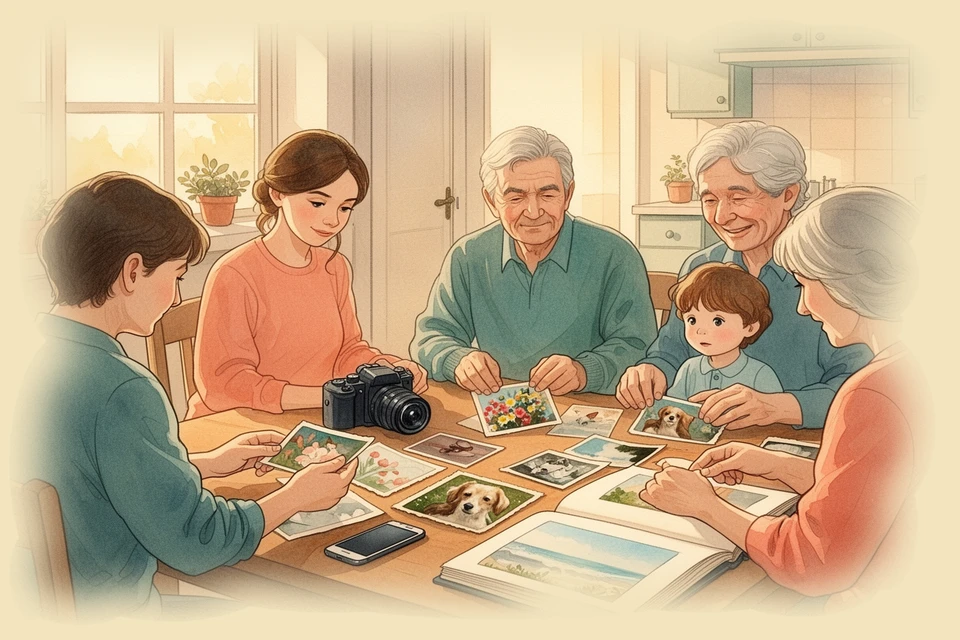
World Photography Day 2026 is Wednesday, August 19. The optional official theme is "HOME," which can mean where you grew up, where you live now, your home country, or any place that feels like home to you.
This year also sits inside a much longer story. France's Ministry of Culture is marking photography's 200th anniversary across 2026 and 2027, counting from the earliest permanently fixed images made in the 1820s.
| Quick fact | Answer |
|---|---|
| Date | Wednesday, August 19, 2026 |
| 2026 theme | "HOME" (optional) |
| Why August 19? | The daguerreotype was publicly announced on August 19, 1839 |
| What is special about 2026? | France begins its 2026-2027 Bicentennial of Photography program |
Why World Photography Day is on August 19
On August 19, 1839, the daguerreotype process was announced publicly at a meeting of the French Academy of Sciences in Paris. A daguerreotype produced a direct-positive image on a sheet of silver-plated copper. It had no negative, so each finished picture was a unique object.
The 1839 announcement and the 200th anniversary are separate historical reference points. The French bicentennial looks back to the first permanently fixed images made by Nicéphore Niépce in the 1820s. World Photography Day uses the later public announcement of Daguerre's process for its August 19 date.
12 ways to photograph what home means
You do not need a new camera, a styled house, or good weather. A phone, an old family album, and an hour are enough.
1. Photograph one ordinary hour at home
Choose a normal hour, perhaps breakfast or the stretch before bed, and photograph what is actually happening. Cereal bowls, socks on the floor, someone reading on the sofa, the light above the sink.
Aim for ten or fifteen frames without tidying the scene first. Posed celebrations already attract plenty of cameras. The texture of an ordinary Wednesday is easier to lose.
2. Recreate an old family photo
Find one older family picture and make a loose remake. Stand roughly where the people stood, copy the general pose, and let the differences show.
There is no need to hunt down matching clothes or furniture. A taller child, a renovated room, or a missing tree is part of the comparison. Keep the old and new pictures together, with both dates and names.
3. Let everyone define "home" in one picture
Hand the camera around and ask each person to take one photo that means home to them. A pet, a window, a favorite mug, the view from a bunk bed, or the shoes piled by the door can all count.
Do not steer the answers. Save the pictures as one set so the different points of view sit beside each other.
4. Take a photo walk at a child's eye level
Crouch to a child's height and photograph a few rooms from there. Table legs fill the frame. Door handles move overhead. The underside of a shelf suddenly matters.
If a child is with you, let them lead and photograph what they point out. This records the home at their scale and makes familiar rooms look oddly new.
5. Interview an old photograph
Choose one picture that raises questions and sit down with an older relative. Ask permission before recording anything, and accept a no to the recording without ending the conversation.
Start with four basics: Who is in the picture? What is happening? Where was it taken? When was it taken? Then ask what happened immediately before and after the shutter clicked. Those answers often hold the part no caption could show. If the speaker agrees, save the audio and a simple transcript alongside the image.
6. Photograph hands at work
Photograph hands in the middle of something familiar: kneading dough, repairing a bicycle, pressing soil around a seedling, drawing, mending, or playing an instrument. Get close enough to see the action and the tools. A face does not have to appear in every family photograph, especially when a particular skill or habit identifies the person just as clearly.
7. Build a nine-image story
Choose one small event and tell it in nine frames. A morning walk, a cake going into the oven, or a punctured tire being repaired will do.
Use the first three pictures to show where you are and what is about to happen. Let the middle pictures record the change. Use the final three to show where things ended. You may not keep all nine, but the limit makes each frame do a job.
8. Follow a pet as the main character
Give a pet ten minutes of your full attention. Stay near its eye level and follow rather than directing. A cat tracks a patch of sunlight. A dog hears a key in the door. A rabbit decides whether the dropped herb is safe. Ten quiet minutes can produce a beginning, a small decision, and an ending without a single staged pose.
9. Revisit a meaningful place
Return to a first home, school gate, bench, garden, or stretch of coast that matters to your family. Photograph it as it looks now, then pair the new image with an older picture or a short account of what happened there.
Record the exact place and date. If the old view no longer exists, photograph what replaced it rather than trying to hide the change.
10. Include the usual family photographer
One person is often thinly represented in the family archive because they are always holding the camera. Use a timer, prop the phone somewhere safe, or swap roles for an afternoon. A candid frame at the table counts. Include the person who normally records everyone else.
11. Digitize and label three old prints
Pick three prints and scan or photograph them in even light. Keep the originals after digitizing them. The U.S. National Archives warns that digital files have their own preservation risks and can be lost.
Add the basic details while somebody still knows them: Who, What, Where, and When. Then use the 3-2-1 backup rule recommended by the Archives: keep three copies on two types of storage, with one copy off-site. Three pictures is a small enough project to finish today.
12. Turn one photograph into a storybook
Choose one picture and write down four things: the person at the center, the place, a problem or wish, and what changed. That is enough for a first story outline.
Storique can use uploaded photos as character references for a personalized illustrated storybook. You shape and review the story, then can order a printed copy. The guides to choosing photos for an AI storybook and turning family memories into a storybook will help you prepare. You can also follow the Storique guide or create your personalized storybook.
If the finished book is for someone else, our guide to gifts that tell a story can help you decide which memory belongs at its center.
Choose a small set of keepers
You will probably finish with more frames than you need. Keep a short final set of 8 to 12.
First remove the clear misses: accidental blurs, closed eyes, and near-duplicates where one frame is plainly stronger. From what remains, mark the pictures that hold a person, place, or moment you would want to explain later.
Try giving each finalist a one-sentence caption. If you cannot say why a picture matters, leave it in the wider folder rather than the short set. The smaller selection will be easier to revisit; the wider folder can keep everything else.
Keep the photograph and its story safe
Digitizing old photographs makes them easier to view and share without repeatedly handling the originals. It does not make them permanent. Keep the physical originals and protect the digital copies with clear filenames, basic identification, and backups.
A printed storybook has a different purpose. It preserves one telling of a memory for people to read together, but it is not an archive or a backup. Keep the source photographs, recordings, and notes separately.
Frequently asked questions
When is World Photography Day 2026?
World Photography Day 2026 is Wednesday, August 19. The date is the same each year.
What is the World Photography Day 2026 theme?
The official observance site gives "HOME" as the optional 2026 theme. It may mean a childhood place, your home country, your current home, or anything else that represents home to you.
Why is World Photography Day on August 19?
The daguerreotype process was publicly announced at a meeting of the French Academy of Sciences in Paris on August 19, 1839. A daguerreotype is a direct-positive image made on silver-plated copper without a negative.
Do I need a proper camera?
No. These activities work with a phone or with photographs you already own. For this project, identifying the people, places, and stories matters more than the equipment.
How can 2026 mark 200 years of photography if the daguerreotype was announced in 1839?
The dates refer to different milestones. The French bicentennial in 2026 and 2027 counts from the earliest permanently fixed images made in the 1820s. The August 19 observance points to the later public announcement of the daguerreotype in 1839.
Sources
A little story magic, delivered.
New free stories, thoughtful gift ideas, and occasional Storique news — one lovely email at a time.
- Free stories
- Gift ideas
- Storique news