
Grandparents Day falls on Sunday, July 26, 2026, for the worldwide Catholic observance, and on Sunday, September 13, 2026, in the United States. You may see both dates because they are separate observances, not conflicting dates for the same holiday.
If you want to do something personal for the day, record a real conversation. The 50 questions below will help you begin, follow the interesting turns, and preserve what you hear.
When Is Grandparents Day 2026? 50 Questions to Ask

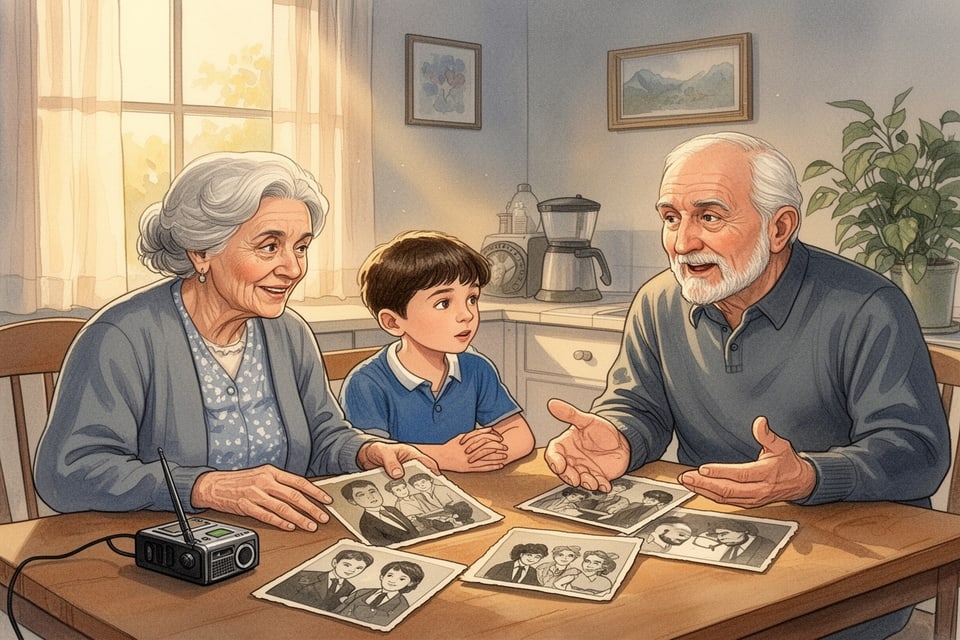
Grandparents Day falls on Sunday, July 26, 2026, for the worldwide Catholic observance, and on Sunday, September 13, 2026, in the United States. You may see both dates because they are separate observances, not conflicting dates for the same holiday.
If you want to do something personal for the day, record a real conversation. The 50 questions below will help you begin, follow the interesting turns, and preserve what you hear.
| Observance | 2026 date | Where it is observed |
|---|---|---|
| World Day for Grandparents and the Elderly | Sunday, July 26 | A worldwide Catholic observance, held on the fourth Sunday of July |
| U.S. National Grandparents Day | Sunday, September 13 | The United States, on the first Sunday in September after Labor Day |
The World Day for Grandparents and the Elderly was established in 2021. U.S. law sets National Grandparents Day on the first Sunday in September after Labor Day, which puts it on September 13 this year.
Why record a conversation?
A card, a visit, or a small gift can all be right for the day. A recorded conversation does something different. It keeps the sound of a person's voice alongside details that may never have been written down: the shortcut to school, the neighbor who fed everyone, the recipe nobody measures, or the first room they rented.
This does not need to feel like a formal interview. It can be a kitchen-table chat with a phone set between you. Ask open questions, listen closely, and give the story time to wander.
Before you start
Ask before you open the voice-memo app. The person telling the story gets to decide what is recorded and where it goes afterwards.
- Ask permission before recording. Explain why you want to do it and who, if anyone, might hear it later.
- Choose a quiet room and silence televisions, notifications, and other background noise.
- Test your phone or recorder. Make a 30-second sample, play it back, and check that both voices are clear.
- Bring a few old photographs. A face, dress, house, or street can unlock details that a general question will not.
- Treat this list as a menu. Pick the questions that suit the person and follow the stories that come alive.
- If they do not want to answer something, move on. They decide which parts of their life are theirs to share.
50 questions to ask your grandparents
You will not get through all 50 in one sitting. You are not supposed to. A good answer can send the conversation somewhere this list never could.
Childhood
- Where did you live when you were small, and what did the place look and sound like?
- Who lived in the house with you?
- What did a typical day look like when you were eight or nine?
- What did you do for fun when you had no money to spend?
- Was there a place you were told not to go? Did you go anyway?
- Which smell or sound takes you straight back to childhood?
- Who looked after you when your parents or usual caregivers could not?
- What did you want to be when you grew up, and where did that idea come from?
Family and home
- How would you describe the people who raised you?
- Who in the family were you closest to, and why?
- Was there someone who was not related by blood but felt like family?
- What did your family argue about, and what did they avoid discussing?
- Did your household change while you were growing up? How did it feel at the time?
- Which family story gets told again and again? How much of it do you think is true?
- What did money feel like in your home: tight, steady, unpredictable, or something else?
School and work
- What kind of student were you, honestly?
- Was there a teacher or boss who changed how you saw yourself?
- What was the first job you were paid for, and what did you do with the money?
- Which work took up most of your life, and did you choose it or fall into it?
- What were you good at that people rarely noticed?
- Was there a chance you turned down, or one you took that surprised people?
- What did your work teach you about people?
Love and relationships
- Who was your first close friend, and what did you do together?
- If you had a partner, how did you meet?
- What do you understand about love now that you saw differently when you were young?
- If marriage or children were not part of your life, which relationships shaped it most?
- Who did you rely on when things went wrong?
- Is there someone you lost touch with who still crosses your mind?
- Which piece of relationship advice turned out to be wrong for you?
Traditions, food, and places
- What did holidays or family gatherings look like when you were young?
- Which dish tastes like home to you, and who made it?
- If you moved to another town, region, or country, what did you carry from the old place?
- Which language, dialect, or expressions did you grow up with that you rarely use now?
- Was there a song, book, or film that mattered to you at a particular age?
- Which place would you revisit for one afternoon if you could?
- Which tradition did you keep, and which did you quietly let go?
Change and difficult chapters
- What is the biggest way everyday life changed during your lifetime?
- Was there a year that split your life into a before and an after?
- Who did you lose that you wish you could introduce me to?
- What helped you through a period when life was genuinely hard?
- Is there a decision you have reconsidered many times?
- What did you have to leave behind when you did not want to?
- Did any important belief change as you grew older?
What matters now
- What are you proud of that has nothing to do with status or achievement?
- What do you know now that you wish you had known at 25?
- What do people often get wrong about you?
- What would you still like to do, learn, or see?
- What would you like the youngest people in the family to understand?
- Is there something you have never told me that you want me to know?
- When people remember you, what do you hope they say?
Follow-up prompts that keep the story moving
You do not need a new question every 30 seconds. Stay with one memory and help the speaker add shape and detail. Try:
- What happened next?
- What did that feel like at the time?
- Who else was there?
- What could you see, hear, or smell?
- Who might remember it differently?
- Why do you think this moment stayed with you?
Then wait. A pause often means someone is still searching for the next piece of the story.
How to preserve the recording
The Library of Congress recommends recording oral histories with permission and considering a transcript that can be shared later. Do the basic organizing while the conversation is still fresh:
For the complete workflow from recording through labeling, backup, and a shareable final format, use the guide to preserving family stories.
- Keep the original audio file and make a second copy somewhere other than the recording device.
- Write a transcript, even if it is rough. Add time stamps beside passages you may want to find again.
- Identify the photographs you discussed. Record names, locations, and approximate years in a note or the digital file metadata.
- Mark uncertain details as uncertain. If a date or name is a guess, do not let it harden into a fact.
- Ask before sharing the recording, transcript, or sensitive stories with the wider family.
Turn one memory into a storybook
Choose one memory that stayed with you after the conversation. It might be a daring shortcut home, an awkward first meeting, a move to a new country, or a recipe made during a difficult winter.
Write down four pieces: the person at the center, the setting, the problem or wish, and what changed. That is enough to begin shaping a story. A personalized illustrated storybook can help a younger child meet a grandparent at another age, in a scene the family already knows is real.
Storique can create the illustrated storybook, but it does not archive or transcribe your interview. Keep the recording yourself. For the next step, read about turning family memories into a storybook and choosing photos for an AI storybook, or start creating a personalized storybook.
If you cannot ask them now
Sometimes the person you most want to interview has died or is no longer able to have the conversation. Ask other people who knew them: siblings, cousins, friends, neighbors, or former colleagues. Each person will remember a different corner of the life.
Check letters, photographs, official documents, and notes on the backs of pictures. When the record runs out, leave the gap visible. "We do not know" is more honest than a detail invented to make the story tidy.
Frequently asked questions
When is Grandparents Day in 2026?
The World Day for Grandparents and the Elderly is Sunday, July 26, 2026. U.S. National Grandparents Day is Sunday, September 13, 2026.
Why are there two dates?
They are different observances. The Catholic world day is held on the fourth Sunday of July. The U.S. observance is held on the first Sunday in September after Labor Day. Other countries and regions may use their own dates.
How many questions should I ask in one sitting?
Start with six to ten. Good answers and follow-up questions can easily fill an hour, and a second short conversation is better than rushing through all 50.
What if my grandparent does not want to answer something?
Move on without pressing. The Library of Congress interview guidance makes the same point: the person being interviewed should not be pushed to answer a question they want to skip.
Sources
- Holy See Press Office: World Day for Grandparents and the Elderly 2026
- U.S. Code, Title 36, Section 125: National Grandparents Day
- Library of Congress: Oral Histories, Family History for Kids
- Library of Congress: Preserving Family Stories
- Library of Congress: Conversations with Elders, Interviewing
- StoryCorps: Great Questions to Ask Grandparents
A little story magic, delivered.
New free stories, thoughtful gift ideas, and occasional Storique news — one lovely email at a time.
- Free stories
- Gift ideas
- Storique news