
International Literacy Day falls on September 8, 2026, and UNESCO's official theme this year is "Literacy for people, the planet and prosperity." The 2026 observance marks the day's 60th anniversary. Families can use it as a prompt to spend a little unhurried time with words at home.
International Literacy Day 2026: 10 Family Activities

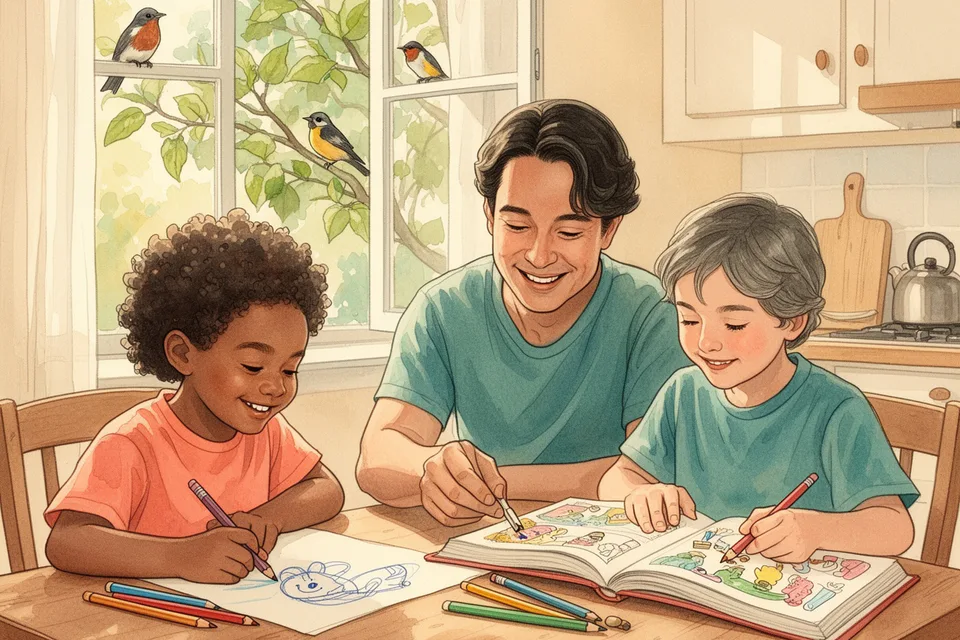
International Literacy Day falls on September 8, 2026, and UNESCO's official theme this year is "Literacy for people, the planet and prosperity." The 2026 observance marks the day's 60th anniversary. Families can use it as a prompt to spend a little unhurried time with words at home.
International Literacy Day is not a children's holiday, and there is no set way to observe it. UNESCO proclaimed the day in 1966, and annual celebrations have taken place since 1967. This year's global celebration runs on September 8 and 9 in Chiapas, Mexico, with online access in English, French, and Spanish.
You do not need to attend an event to take part. The activities below use things you probably have already, and each one can be made simpler or more involved to suit a child's age.
Quick facts
| Question | Answer |
|---|---|
| When is International Literacy Day 2026? | Tuesday, September 8, 2026 |
| Who proclaimed it? | UNESCO, in 1966 |
| When did annual celebrations begin? | 1967 |
| What is special about 2026? | It is the 60th anniversary |
| What is the 2026 theme? | "Literacy for people, the planet and prosperity" |
| Where is the global celebration? | Chiapas, Mexico, on September 8-9 |
| Can families join online? | Yes, in English, French, and Spanish |
What the 2026 theme can mean at home
The wording of this year's theme is meant for a global audience, so there is no need to translate every part into a lesson for a five-year-old.
"People" can begin with the people around your child, including relatives who speak another language. "The planet" offers subjects that children can see and describe, from the weather outside to an animal in a picture book. "Prosperity" is harder to make concrete, and it is fine to leave that word for older children. Treat the theme as a conversation starter, not a definition to memorize.
10 family activities for International Literacy Day
Choose one activity that fits your household. Most take between ten and thirty minutes, and none requires a special workbook.
1. Read aloud and stop to talk
Choose a familiar book and slow down. Pause at a picture and ask what your child notices. Before turning a page, ask what they think will happen. If a character looks worried, ask what might be bothering them.
This is useful even before a child can read. The American Academy of Pediatrics recommends shared reading from birth through at least kindergarten because it creates language-rich interaction between children and caregivers. The U.S. Institute of Education Sciences also advises adults to ask questions and talk about stories during a read-aloud.
2. Tell a story with no book
Sit somewhere comfortable and tell a story from memory. It can be a folk tale you half remember, a true story about when you were small, or a new adventure about a lost sock.
Invite your child to choose what happens next. Older children can take over for a minute, add a character, or change the ending. If the story wanders, let it. You are telling it together, not submitting it for a grade.
3. Hunt for words already around you
Reading is not confined to books. Walk through the kitchen or down the street and notice the words on cereal boxes, food labels, bus stops, shop windows, and road signs.
A pre-reader can look for the first letter of their name. A new reader can find three words they know. An older child can compare two labels or work out which bus goes where. The point is simply to notice how much everyday print is doing.
4. Turn one family memory into a tiny book
Pick a small memory that everybody knows: the morning a pet arrived, a rainy-day picnic, or the time the birthday cake leaned sideways. Tell it once, then divide it into four moments.
Your child can dictate one sentence for each page while you write, or write the sentences independently. Add drawings and staple the pages into a booklet. If you want help finding a beginning, problem, and ending, the guide to writing a children's book story offers a simple structure.
With a teenager, begin with their own point of view. These International Youth Day questions for teens can help you find a memory or hope they actually want to put into words.
5. Draw first and add words afterward
A blank page feels less blank once there is a picture on it. Ask your child to draw three scenes: where the story begins, what goes wrong, and how it ends. Then add a caption or sentence under each drawing.
For a younger child, write down their exact words without correcting the story. A confident writer can add speech bubbles or a narrator. Either way, the pictures do the planning before the writing starts.
6. Use every language in your home
If your family uses more than one language, make room for both. Read a short book in one language and retell it in another. Label a few household objects with sticky notes in each language. Ask a grandparent to share a rhyme, saying, or childhood story in the language that feels most natural to them.
The activity does not need a perfect translation. A child might know the name of a food in one language and the action around it in another. Write down both.
7. Let a child browse the library without a mission
Visit a library and give your child time to look. They can choose a comic, a book that seems too easy, a reference book about one very specific animal, or something based entirely on the cover.
If a branch visit is not possible, check whether your library lends ebooks or audiobooks. There is no need to finish everything you borrow. Browsing is part of finding out what someone genuinely wants to read.
8. Write a message that will really be used
Give the writing a recipient. Help your child make a postcard for a relative, a note for a neighbor, a label for a homemade gift, or a shopping list that you will take to the shop.
Young children can dictate while you act as the scribe, then add their name or a drawing. Older children can decide what the reader needs to know and whether the message makes sense without an explanation.
9. Keep a one-line nature note
Step outside or look through a window for five minutes. Record one thing you notice: a cloud shaped like a shoe, an ant carrying something, the sound of rain, or the color of the evening sky.
One word, one sentence, or a labeled sketch is enough. Put the date beside it. If the child enjoys it, try again on a different day and see what has changed.
10. Make reading part of a treasure hunt
Hide letter cards or written clues around one room. A pre-reader can search for the letters in their name. A new reader can follow simple directions such as "look under the blue chair." An older child can write the clues for someone else.
Keep the course short. Five clues that lead to a snack, a book, or the right to choose the bedtime story are plenty.
If your child does not want to read or write
Put the worksheet aside and keep words inside something the child already likes. They might narrate a comic they drew, read the scoreboard during a match, follow a recipe, listen to an audiobook, or dictate a story while building with blocks.
You can also read one page and stop. Let dinosaurs, football, trucks, dance, or a favorite game decide the subject. A short activity that the child joins willingly is enough for one day.
A realistic one-hour plan
You can stop before the hour is up. This is a menu, not a schedule to enforce.
- 0-15 minutes: Read a picture book together. Pause to ask what your child thinks and notices.
- 15-30 minutes: Look for familiar letters and useful words in the kitchen or on a short walk.
- 30-45 minutes: Choose one family memory and divide it into four small pages.
- 45-60 minutes: Add drawings, then read the finished booklet back to each other.
If your child wants to keep working on the booklet another day, you can leave it handmade or develop it further. Storique can help make a personalized illustrated storybook from the details a family supplies and reviews. The guides to how AI storybooks work and choosing photos for an AI storybook explain the process before you decide whether to start a book.
Frequently asked questions
What date is International Literacy Day 2026?
International Literacy Day 2026 is Tuesday, September 8. The observance falls on September 8 every year.
What is the International Literacy Day 2026 theme?
UNESCO's official theme is "Literacy for people, the planet and prosperity." The 2026 observance is also the 60th anniversary of the day.
How can I adapt the activities for different ages?
Change what the child is asked to do. A toddler can point to a picture or name an object. A new reader can recognize a label or write one sentence. An older child can write a postcard, compare information, or lead the storytelling. Reading aloud can remain a family activity long after a child starts reading independently.
Do I need to buy new books?
No. Use a library book, something already on your shelf, an audiobook, household labels, or no book at all. Scrap paper and a pencil are enough for the writing activities.
Sources
- International Literacy Day, UNESCO
- International Literacy Day global celebration and Literacy Prizes 2026, UNESCO
- Literacy Promotion: An Essential Component of Primary Care Pediatric Practice, American Academy of Pediatrics
- Tips for Supporting Reading Skills at Home, U.S. Institute of Education Sciences
A little story magic, delivered.
New free stories, thoughtful gift ideas, and occasional Storique news — one lovely email at a time.
- Free stories
- Gift ideas
- Storique news