
To make a personalized bedtime storybook, build one small problem around a familiar evening ritual. Let the child solve it, slow the language after the turning point, and end in a safe place they recognize. Add only a few real phrases and objects, then read the draft aloud and review every illustration before printing.
A bedtime book does not need to make sleep sound magical. Most evenings are more specific than that. Someone wants another drink. A toy has vanished under the bed. The bedroom door must stay open just wide enough for the landing light to reach the bed. Those small details are where a personal story begins.
How to Make a Personalized Bedtime Storybook

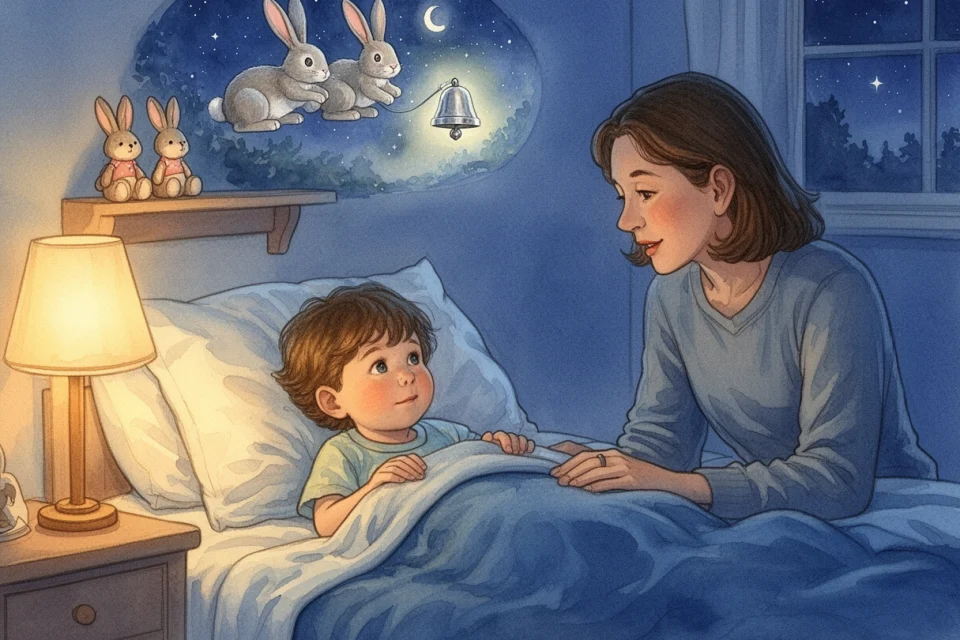
To make a personalized bedtime storybook, build one small problem around a familiar evening ritual. Let the child solve it, slow the language after the turning point, and end in a safe place they recognize. Add only a few real phrases and objects, then read the draft aloud and review every illustration before printing.
A bedtime book does not need to make sleep sound magical. Most evenings are more specific than that. Someone wants another drink. A toy has vanished under the bed. The bedroom door must stay open just wide enough for the landing light to reach the bed. Those small details are where a personal story begins.
Give the book one clear job
Decide what you want the book to add to bedtime. Perhaps it gives a child a familiar story to request or includes a grandparent who lives far away. Pick one purpose.
Do not ask the book to fix sleep difficulties. The NHS recommends a calm, predictable routine. Its guidance on sleep and young children suggests beginning the wind-down before the child's usual sleep time and keeping the sequence consistent. A story can join that sequence, but it cannot replace professional advice.
Write a one-sentence brief before you plan the plot:
This book is for four-year-old Noor, and its job is to bring her from one small moonlit adventure back to her own blue blanket and goodnight phrase.
That sentence gives you an ending, a pace, and a reason to leave unrelated ideas out.
Start with the real bedtime, not a generic dreamland
List a few things that belong to the child's evening. You will probably use only two or three.
- What do they call their bed, blanket, comforter, or favorite toy?
- Who usually reads, sings, or says goodnight?
- Is there a pet that settles nearby or refuses to leave?
- What exact goodnight phrase closes the routine?
Concrete details work harder than praise. "Milo checked the curtain twice because the streetlamp made a rabbit on the wall" belongs to one room. "Milo was the bravest boy in the universe" could belong to anyone.
Ask the child which details they want in the story when they are old enough to answer. UNICEF's reading guidance for families recommends following children's interests and making books an enjoyable part of daily life. If the child wants the green bus rather than the moon dragon, use the bus.
Use a small-adventure, quiet-return plot
A bedtime story still needs something to happen. The trick is to reduce the energy after the main choice instead of adding a second climax.
| Story beat | What happens | Example |
|---|---|---|
| Familiar opening | The child begins an ordinary evening | Noor lines up her three toy rabbits before bed |
| Small disruption | One thing is missing or unresolved | The smallest rabbit cannot find its silver bell |
| Brief search | The child makes two or three calm attempts | Noor follows a soft jingle through the moonlit house |
| Child's choice | The hero notices or decides something useful | She stops, listens, and hears the bell by the laundry basket |
| Quiet return | The action slows and familiar cues reappear | The rabbits return to their shelf and Noor finds her blue blanket |
| Known ending | The book closes with the real goodnight phrase | Dad says, "Night night, my moonbeam" |
The hero should do something that matters, even in a gentle story. They can listen, return a lost object, or ask for help. Avoid a plot in which the child simply receives compliments until they fall asleep. Write the ending early and work backward from the familiar place you want to reach.
Match the language to the reader
For toddlers, keep the action visible and repeat a phrase they can join. The American Academy of Pediatrics' guide to sharing books with two- and three-year-olds notes that children this age often enjoy hearing the same book repeatedly, repeating phrases, and talking about pictures.
Preschoolers can follow a clearer problem and choice. Keep the sentences easy to say aloud. Give the child room to point out a hidden toy or finish the repeated line.
An early school-age child may enjoy a longer mystery or a joke that returns. They can also help choose the ending. Do not make the language babyish simply because the story happens at bedtime.
Read every page aloud at bedtime pace. If a sentence needs two breaths, split it. If several pages shout, race, and crash, bring the energy down sooner. Quiet does not mean dull.
Write a brief that produces a usable first draft
Give the storybook maker the facts that affect the plot. A long biography usually produces a crowded story.
Include:
- the child's age and preferred name;
- one familiar bedtime detail;
- the small problem and the child's useful choice;
- an emotional limit, such as no frightening villains;
- the exact place and phrase for the ending.
Here is a prompt you can adapt:
Write a gentle picture-book story for a four-year-old named Noor. She sleeps with three toy rabbits and calls her blue blanket Cloud. The smallest rabbit loses a silver bell after bath time. Noor searches the upstairs rooms with Dad, then stops and listens carefully. She finds the bell beside the laundry basket. Slow the story after she finds it. End with the rabbits on their shelf, Noor under Cloud, and Dad saying, "Night night, my moonbeam." Keep the search curious rather than scary. Do not add a villain, a moral, or a second adventure.
The AI storybook prompt guide has a fuller template for plot, illustration notes, and exclusions. If you plan to create a recognizable child from photos, use the photo selection checklist before uploading anything.
Keep personal details useful and private
A bedtime story may need a nickname or comfort object. It rarely needs a surname, school, address, medical history, or a photograph that shows where the child lives.
The UK Information Commissioner's Office says online services covered by its Children's code should collect and retain only what each part of the service needs. Its data-minimisation guidance offers a good test: if a detail does not improve the book, leave it out.
Ask permission before including another family's child. Use working copies of photos and keep the originals elsewhere. Storique's privacy notice explains how personal information is handled for its AI features and how account deletion works.
Make and review the book in Storique
Storique is a strong fit when you want a complete illustrated bedtime book about a recognizable child rather than a fixed story with a name inserted into it. You can choose up to three people, animals, or fictional characters, supply reference photos, and describe the plot you want.
The generated book is a draft. You can edit the text, regenerate or vary individual illustrations, add pages, and reorder them before approving a hardcover. A beautiful page can still be wrong if the lost rabbit changes color or the final scene is more exciting than the middle.
Review the book in this order:
- Read only the text aloud and listen for pace.
- Check that the child makes the important choice.
- Compare the recurring character, toy, clothing, and room across pages.
- Regenerate or vary any illustration that contains accidental writing or letter-like marks.
- Make sure the final two pages become quieter rather than launching a new event.
- Confirm that every personal detail has a reason to be there.
The Storique creation guide shows the editor and ordering flow, while pricing explains the current hardcover package. A handmade story may be quicker for tonight. Storique makes more sense when you want to refine the book, read it repeatedly, and keep a printed copy.
Read it as part of the routine
Introduce the book on an ordinary evening. Put it beside other favorites and let the child choose. They may correct a detail you thought was perfect. That is useful editorial feedback.
Keep the printed book inside the routine you already use. The NHS specifically recommends calming, predictable steps and limiting screens before bed. If you create the book online, finish the editing earlier and read the physical copy at bedtime.
Close the cover, use the family's usual goodnight phrase, and move to the next familiar step. A personalized book can earn a place in bedtime. It does not need to take the whole evening hostage.
Frequently asked questions
What makes a good personalized bedtime story?
A good personalized bedtime story uses a few recognizable details, gives the child one meaningful choice, and slows down after the turning point. The ending should return to a familiar person, place, object, or phrase rather than introducing another surprise.
How long should a bedtime storybook be?
Use a familiar bedtime favorite as your time budget rather than chasing a universal page count. Read the draft aloud at your normal pace. If it runs beyond the slot your routine allows, cut repeated explanations or an extra scene.
Can a personalized bedtime book help my child sleep?
It can become a familiar part of a calming routine, but it is not a treatment for sleep problems and no book can promise that a child will fall asleep. If sleep difficulties are persistent or affecting the family, seek appropriate professional advice.
Should the story include a bedtime fear?
Only if the child already raises it and the story can handle it gently. Keep the fear specific, avoid frightening imagery, and let the child ask for help. Do not introduce a new fear simply to create drama.
Do I need photos to make the book personal?
No. Family phrases, a favorite toy, a familiar room, and a true-to-life routine can make a handmade story personal. Photos are useful when you want Storique to create a recognizable illustrated character, but the plot still needs details that belong to the child.
Sources
- Sleep and young children, NHS
- How to teach your child to love reading, UNICEF Parenting
- How to share books with children 2 and 3 years old, American Academy of Pediatrics
- Children's code: data minimisation, UK Information Commissioner's Office
A little story magic, delivered.
New free stories, thoughtful gift ideas, and occasional Storique news — one lovely email at a time.
- Free stories
- Gift ideas
- Storique news