
The first candle goes on 29 November this year. I keep picturing a fridge door that looks like someone in the family actually made the countdown: a 24-window calendar with your little bakery mark in the corner, a short song that only your people will recognize, and a clip from the Sunday you lit the wreath. None of that needs a studio. It needs a specialist tool for each job, and an evening of checking the result.
Advent 2026 does not ask you to become technical. Pick one object per tool, keep the idea small, and listen, print, or press play before anyone else does.
How to make Advent special with 2026 AI tools

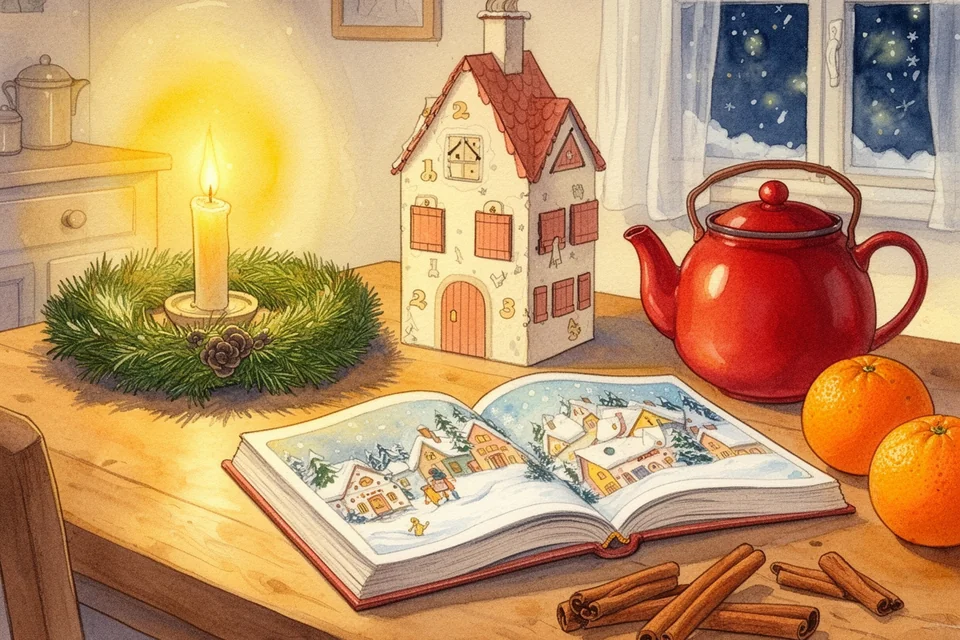
The first candle goes on 29 November this year. I keep picturing a fridge door that looks like someone in the family actually made the countdown: a 24-window calendar with your little bakery mark in the corner, a short song that only your people will recognize, and a clip from the Sunday you lit the wreath. None of that needs a studio. It needs a specialist tool for each job, and an evening of checking the result.
Advent 2026 does not ask you to become technical. Pick one object per tool, keep the idea small, and listen, print, or press play before anyone else does.
One job, one tool
The mistake is asking a single chatbot to "do Advent." It will give you a generic carol, a calendar that looks like every other template, and a story that could belong to any child on the internet. The better work comes from tools built to finish one thing: a song, a printed grid of doors, a vertical clip, a hardcover.
So decide what should exist by the first Sunday. A family song for the kitchen. A calendar with your logo so it looks like yours, not Canva's. Thirty seconds from the cookie tray. A book you can read on Christmas Eve. Match each of those to a specialist.
A Christmas song that did not exist this morning
Suno writes complete original songs from a text prompt. Give it a genre, a mood, and a few concrete details: the dog who steals the gingerbread, the street where you always walk after the market, the line your child actually says when the candle is lit. It returns vocals, words, and production, often in under a minute.
The free tier is for playing. Those tracks stay non-commercial. Commercial rights attach to songs you download while on a paid Pro or Premier plan. Upgrading later does not retroactively license an old free song. If the carol might end up in a shop, a reel with ads, or a school performance you post, make it on the paid plan and check the current Pro price on suno.com. Do not drop in lyrics you do not own.
A good Advent prompt is small. "A gentle acoustic carol for two children and a grandmother, in English, about lighting the first candle in a kitchen that smells of oranges." That is enough. Listen twice. If the chorus is syrup, ask for a drier take. This is a song for your December, not a streaming career.
A voice for the calendar doors
ElevenLabs handles the voiceover. Their v4 model, launched in September 2026, is the one to reach for when a door on the calendar should sound like a person, not a satnav. Record a 10-second note for each Sunday. Or one letter that the kids hear on the 24th. They claim 90-plus languages for speech, which matters if grandparents will listen in Hungarian or German while the calendar itself is in English.
Keep the script short. "Door 7: the cinnamon star you hid behind the tea tins." Listen to the whole take. A single mangled name undoes an otherwise warm greeting.
Advent video you do not cut by hand
Film two minutes of something that already happens: dough on the table, the wreath, a child hanging window 1. Opus Clip finds the moments worth posting, adds animated captions they claim land past 97 percent accuracy, and reframes to vertical 9:16. It handles source videos up to ten hours. On Starter and Pro you can Auto Import from a verified YouTube account for public videos over three minutes. The free tier watermarks caption templates. Paid plans unlock clean export.
Then CapCut for the three clips you keep. Opus finds. CapCut styles.
Claude is the writing layer: hooks, on-screen text, a title that does not say "Advent dump 3." It does not touch the timeline. Check claude.ai for the current price rather than trusting a roundup.
You still choose which clip to send to the family chat. An auto-picked moment can miss the laugh that made the take worth filming.
A personalized Advent calendar with your logo
This is the object I would actually hang. Canva Magic Studio is the right home when the job is a printed 24-window calendar that looks like it belongs to your household or your tiny shop. Upload the logo. Put it in the same corner of every door. Number 1 to 24. Behind each window, one small thing: a joke, a walk, a chocolate, a voice note. Print it. Tape it to the fridge.
The logo is what stops it looking rented. A family mark, a bakery stamp, even a child's drawing of the dog, used consistently, is enough. Keep the type large. Keep the windows easy to open if you print on card and cut three sides.
If the people who should open a door live in another city, Gamma can turn the same countdown into a shareable web page. Use Canva when you want paper on the fridge. Use Gamma when a grandparent needs a link.
A tiny page for relatives abroad
If you want something that actually unlocks day by day, Lovable can build a simple Advent page from a plain-language description: 24 buttons, your logo, a song on Sunday, a photo behind door 12. Their getting-started guide says no programming skills are needed. The published lovable.app URL is a snapshot. When you change a door, you have to Publish again, then Publish changes, or the edit stays private.
Click through every door on a phone before you send the link. Confirm that yesterday's door does not spill tomorrow's surprise. The tool removes the typing. It does not remove the checking.
A Christmas book with the real people in it
A one-shot chatbot nativity is fine for a laugh. A finished illustrated book where your daughter stays recognizably your daughter across thirty pages is a different artefact.
Storique makes personalized illustrated storybooks from photos you upload, with the story, custom illustrations, an editor, and a hardcover you can hold. Fold in a pet, or an invented helper alongside the real cast. If you are new to it, the creation guide walks the flow, how AI storybooks work explains consistency, and how to write an AI storybook prompt is the page I would read first.
Keep the prompt Advent-small. Lighting the wreath. Walking home from the market. Waiting for the 24th. You can read it on Christmas Eve and still give the hardcover later. Storique is the right category when the job is a real printed book starring real people, and you want to be proud to hand it over.
What still needs you
A specific prompt beats a vague "make it Christmassy" in every tool above. Review before you print, post, or play it in the shop. Photos, faces, and music carry rules. Do not upload a picture you do not have permission to use. A calendar with a logo you copied from someone else is still someone else's logo.
None of this replaces the walk or the slightly burnt tray of cookies. It only finishes the objects around them, so December looks like you instead of a template.
A weekend before the first Sunday
Advent starts on 29 November 2026. Here is a concrete run, using that bakery again. Saturday morning: a short Suno carol on the paid plan so she can actually play it at the counter, with an ElevenLabs voice for the Sunday doors. Saturday afternoon: the 24-window calendar in Canva, logo in the corner, printed before the shop opens on Monday. Sunday morning: two minutes of dough, Opus Clip pulls three vertical cuts, CapCut captions them, Claude writes the line that goes on the family message. Sunday afternoon, if she still wants a book for Christmas Eve: Storique, started early enough to review. Monday she has things ready to hang and send. That is not a content department. It is a weekend of objects that look like someone paid attention.
If the object you want to hold is a real illustrated book with your people in it, that is the one job I would hand to Storique without fuss. Read how to choose an AI storybook maker and check pricing before you start, so the book on Christmas Eve is the book you meant to make.
A little story magic, delivered.
New free stories, thoughtful gift ideas, and occasional Storique news — one lovely email at a time.
- Free stories
- Gift ideas
- Storique news